
Which Anatomy Books do I actually Use?
- Eleanor Crook

- May 31, 2022
- 3 min read

This question put me on the spot at the end of my recent lecture on anatomical expressionism for @morbidanatomy! Of course I have shelves and shelves of anatomy books being a hoarder and a bibliophile, but I will show you here which ones get pulled out and used while I'm painting and sculpting. You would spot them instantly in the studio: they're the falling apart ones stuck together with waxy fingerprints.

1. I have an older edition of Photographic Atlas of Anatomy (Lippincott Connect)
by Rohen (Author), Johannes W. (Author), Yokochi (Author), Chihiro (Author), Lutjen-Drecoll (Author), Elke (Author) - it's the body shown in photos of real dissections, and my go-to for anatomy modelling in wax. Next best thing to being in the dissection room.

2. Next up the superb Anatomy for the Artist by Sarah Simblet, my dear friend and veteran of the Ruskin anatomy summer schools, full of her outstanding drawings and commentary together with photo references of life models. You can learn it all from this one.

I remember visiting Sarah when the countless drawings were being made for that book, seeing them piled high and taped to the walls, amazing, and find them a perfect balance of factual and expressive. She has also published excellent books on drawing, trees and botanical drawing.

3. Surprise! I LOVE AND USE anything by George B Bridgman, I really admire the pages he made showing the body as a living, moving, 3d entity , elegant and anatomically understood.

I don't believe he ever made an ugly line in his whole life. Really dynamic visual description, the only help when you're trying to sculpt a non-static pose all alone in the studio at 3 am and everyone alive is asleep. Some of his work is available free online - HERE
4. Le Cere Anatomiche della Specola, Marta Poggesi & Antonio Martelli: Benedetto Lanza, Maria Luisa Azzaroli Puccetti 1979

Good luck finding and paying for this one - it's the hardback catalogue from our favourite anatomical wax museum on Florence. There's a supplement paperback that goes with it if you want the full experience. Really helpful atlas of the body among other things, very explanatory and superbly photographed. Available in several languages. I'm not sure whether the museum still sells it, perhaps a reader can tell us? I think I have it open on the bench for every sculpture I make. A more easy to find book of this collection is Encyclopaedia Anatomica: A Collection of Anatomical Waxes / Sammlung Anatomischer Wachse / Collection Des Cires Anatomiques (Bibliotheca Universalis)
by Monika Von During and Marta Poggesi 2014 from the lovely Taschen books, but it's a bit physically small to be a good studio manual for me,

5. I do tend to prefer medical to art anatomy books for some of my work, and many are available cheaply second hand if you don't insist on a brand new edition. The one I seem to use most is Grant's but Netter is famous and wonderful too. Medical students also get colouring books as learning aids and flashcards from these editions and publishers - whatever it takes, I say. Old copies of Gray's anatomy illustrated by Henry Vandyke Carter are lovely - clear and logical visuals - the newer editions are amazing but dare I say less helpful for sculpting gross anatomy. It depends on the job in hand. Any secondhand bookshop will have a pile of ex-medschool textbooks, just choose one you find attractive.
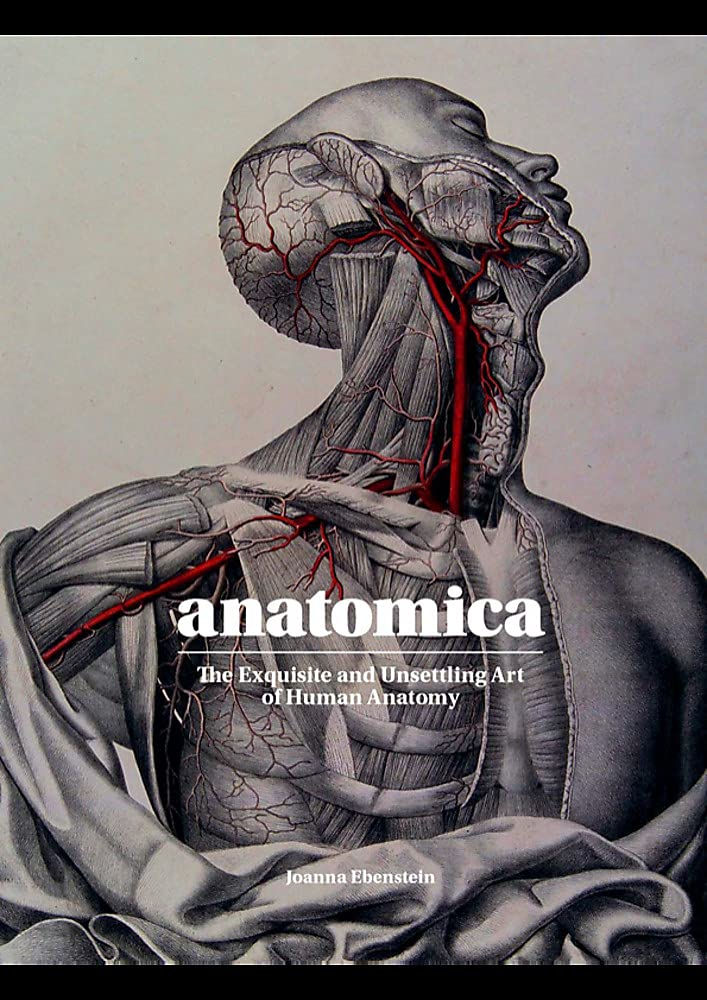
6. A recent addition to my workbench, and I have it open right now for the Gall Bladder model, is Anatomica: The Exquisite and Unsettling Art of Human Anatomy
by our good friend the founder of Morbid Anatomy Joanna Ebenstein 2020 - lavishly illustrated with historic anatomical images and serving up an excellent useable tour of the anatomy as seen by hundreds of artistic and surgical eyes. You can buy this from the Morbid Anatomy shop HERE
So there you have it! I have many more but these are the ones I have open while I work over and over again. Send recommendations of your favourites, on the contact button at the top of this page!


What struck me most in the article was the way the author frames anatomical knowledge as something acquired through tactile negotiation rather than purely visual study especially in the discussion of how repeated redrawing of the same structure becomes a form of embodied calibration. That idea resonates with how I have been approaching my own research where iterative sketching feels like an epistemic tool rather than a technical exercise. I was reminded of conversations surrounding learning accountability that circulate in spaces like New Assignment Help which often emphasise process over product in a similar way. It makes me wonder what would happen if anatomy training incorporated more reflective journaling alongside observation so that the act of looking became inseparable from…